
The 7 Most Common Causes of Roof Leaks in Commercial Buildings
Hah (sigh), leaks, pesky, little problems we have to deal with on a daily basis for our clients. That troublesome water leakage that can, at best, make for a bothersome ‘tic, tic, tic’ that doesn’t let you sleep, and at worst make you spend thousands of dollars in expensive repairs from water and moisture damage. We at Weathertight know how you must feel about having a leak, believe it, we feel that way as well, so don’t worry, because as always, we got your back.
You see, leaks are one of the most common (AND costly) problem for commercial buildings (and their roofs). As you know, commercial roofs lack the slop typically found in residential building roofs, and cover, most of the time, a wider area, so even small issues can quickly turn into serious structural damage if they aren’t addressed early. For example, all that water that accumulated on the roof because of how flat it is can end up you costing a pretty penny if it leaks to the inside.
So, you see how understanding the most common causes of roof leaks can help building owners and property managers prevent expensive repairs and extend the life of their roofing system, don’t you?
Now, let’s get to the important part shall we? In Layman’s term, the most common causes for the most common problem are as follow:
1. Poor Roof Installation
One of the leading causes of roof leaks in commercial buildings is simply… improper installation.
If the roofing materials are not installed correctly, gaps, weak seams, or poorly sealed joints may develop. These small flaws allow water to penetrate the roofing membrane and eventually reach the insulation and roof deck.
Some common installation mistakes include, incorrect membrane sealing, poorly installed drainage systems, and even plain low-quality workmanship.
2. Damaged or Deteriorated Flashing
Flashing is the material installed around roof penetrations and edges to prevent water from entering vulnerable areas.
Flashing is commonly found around spots such as: HVAC units, skylights, chimneys, roof vents and Drainage points.
Over time, flashing can crack, loosen, or corrode due to weather exposure. Once the flashing fails, water can easily enter the building through these openings.
3. Standing Water
Many commercial buildings have flat roofs, which makes proper drainage extremely important.
When water cannot drain properly, it creates standing water, which can sit on the roof for hours or even days after rain.
Standing water can: weaken roofing membranes, increase the risk of leaks, accelerate material deterioration, add structural weight to the roof, etc.
Clogged drains, poorly designed slopes, or blocked gutters are common causes of drainage problems.
4. Membrane Damage
The roofing membrane is the primary waterproof layer of a commercial roof. If it becomes damaged, water can penetrate the roof structure.
Membrane damage may occur due to: foot traffic from maintenance crews, falling debris or branches, extreme weather conditions or aging materials.
Small punctures or tears may not be visible immediately but can eventually lead to significant leaks.
5. Aging Roofing Materials
Every roofing system has a limited lifespan. Over time, materials naturally degrade due to continuous exposure to sunlight, moisture, wind, and temperature fluctuations.
Common signs of aging roofing materials include: cracking or blistering, shrinking membranes, loose seams or surface deterioration
Once materials reach the end of their lifespan, leaks become much more likely.
6. Poor Roof Maintenance
Lack of regular maintenance is another major reason commercial roofs develop leaks.
Without routine inspections, small problems such as loose seams, clogged drains, or minor cracks can go unnoticed. Over time, these minor issues can develop into serious leaks and structural damage.
Routine maintenance typically includes: roof inspections twice per year, cleaning drains and gutters, checking flashing and seams, repairing small damages early, etc.
Preventive maintenance is one of the most effective ways to extend the life of a commercial roof.
7. Roof Penetrations and Equipment Installations
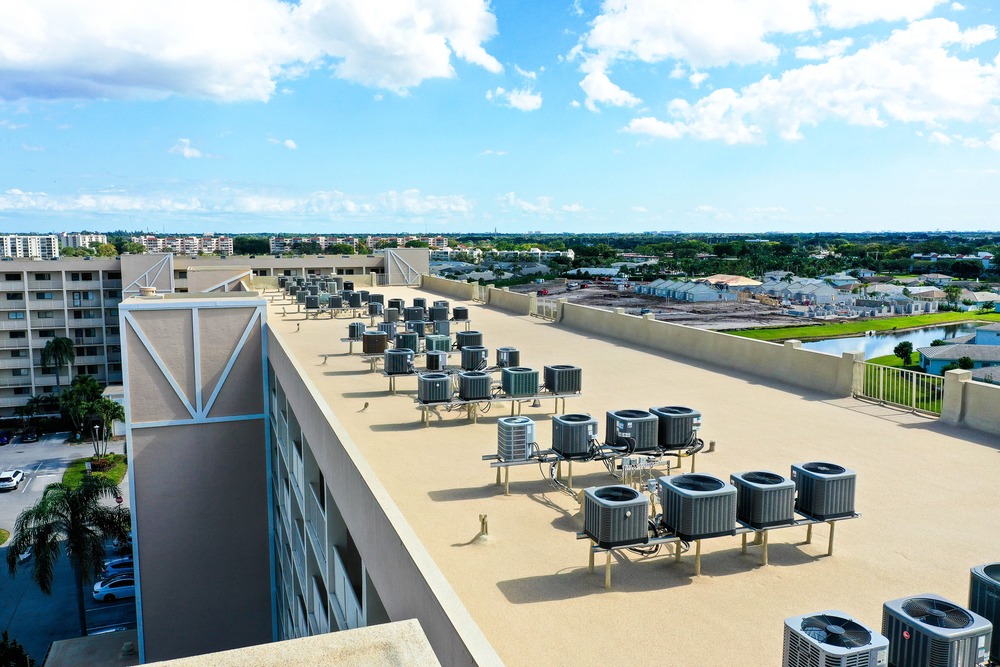
Commercial roofs often contain many penetrations and mounted equipment, including: HVAC units, satellite equipment, vents and exhaust systems or even, solar panels.
Each penetration creates a potential entry point for water if it is not properly sealed.
Leaks often occur when equipment is installed without proper flashing or when existing seals deteriorate over time.
So, as you can see, commercial roof leaks can result from a variety of issues, ranging from poor installation to aging materials and inadequate maintenance. Understanding the most common causes allows building owners to take preventive measures and protect their investment.
Know that by scheduling regular inspections and addressing small issues early, you can significantly extend the lifespan of your roofing system and avoid costly repairs.
Protect Your Building — Start Saving with WeatherTight
Upgrade to a roofing system that pays for itself.
Contact WeatherTight today for a free evaluation.