
Common Commercial Roofing Membrane Technologies
Single-Ply Membranes
TPO (Thermoplastic Polyolefin):
• Most popular in new construction and reroofing.
• Heat-welded seams, high reflectivity, good chemical resistance.
• Lifespan: 20–30 years with proper maintenance.
• Ideal for energy efficiency and large, open roofs.
EPDM (Ethylene Propylene Diene Monomer):
• Synthetic rubber, available in black or white.
• Excellent UV and weather resistance.
• Seams are glued or taped.
• Lifespan: 20–30 years; best for cold climates.
PVC (Polyvinyl Chloride):
• Heat-welded seams, superior chemical and fire resistance.
• Flexible, available in reflective colors.
• Lifespan: 20–30 years; ideal for restaurants, airports, and buildings with chemical exposure.
Multi-Ply Systems
Modified Bitumen:
• Asphalt-based, reinforced with polyester or fiberglass.
• Installed in multiple plies (layers), torch-applied, cold-applied, or self-adhered.
• High durability and redundancy.
Built-Up Roofing (BUR):
• Alternating layers of bitumen and reinforcing felts.
• Surfaced with gravel or mineral cap sheet.
• Proven track record for durability and fire resistance.
OTHER TECHNOLOGIES
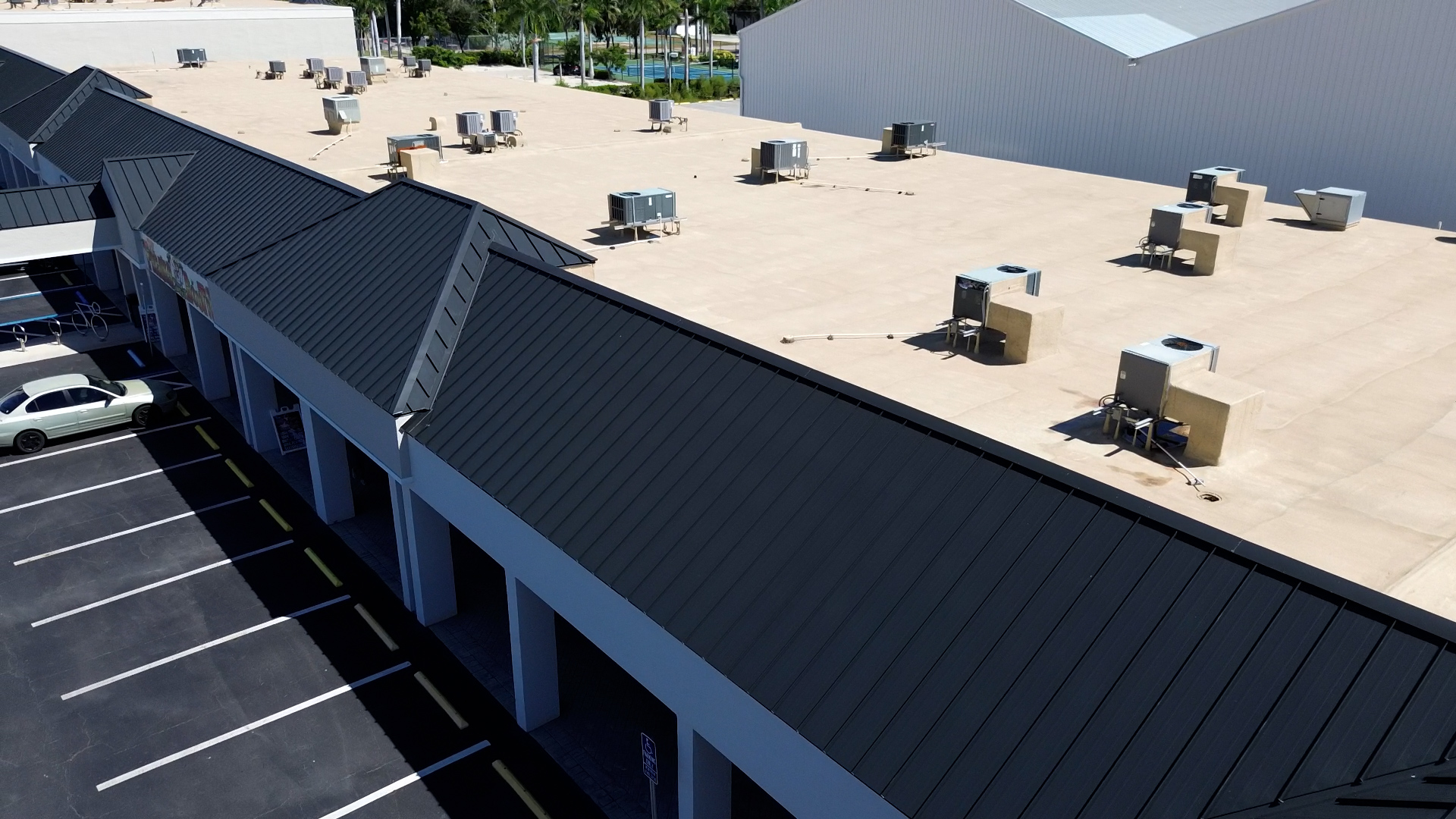
Metal Roofing:
• Standing seam or corrugated panels.
• Exceptional wind and impact resistance.
• Lifespan: 30–50+ years; ideal for high-wind zones.
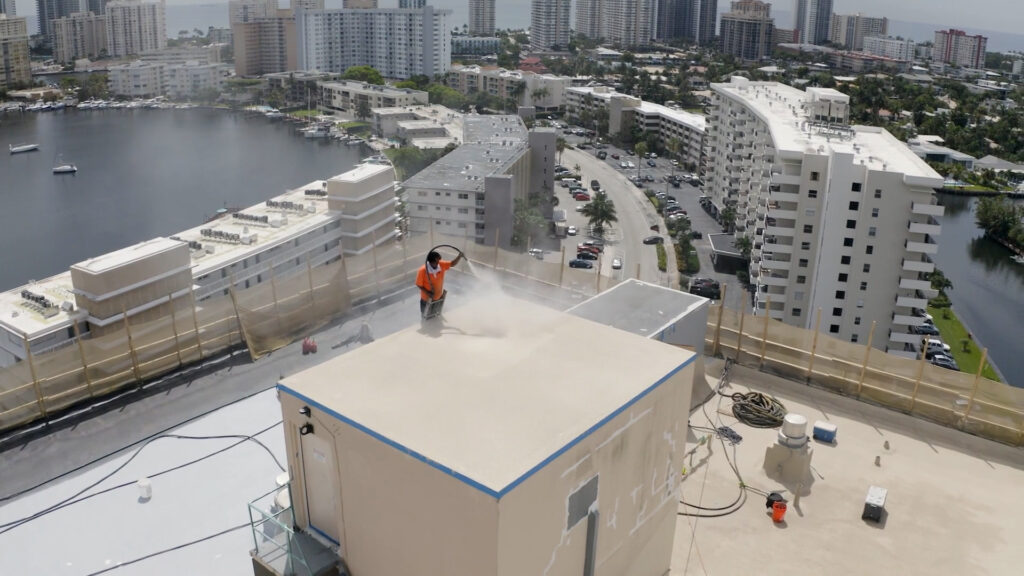
SPF (Spray Polyurethane Foam):
• Sprayed, seamless, insulates and waterproofs in one step.
• Requires UV-protective coating.
• Excellent for complex shapes and restoration.
Liquid-Applied Membranes:
• Elastomeric coatings, seamless, recoatable.
• Used for restoration or complex details.
Selection should be based on climate, building use, budget, and desired lifespan. Manufacturer warranties and local code approvals (e.g., Miami-Dade NOA) are critical in South Florida.
ATTACHMENT METHODS AND FASTENING SYSTEMS
Mechanically Attached:
• Fasteners and plates secure the membrane through insulation to the deck.
• Fast installation, compatible with steel and wood decks.
• Potential for thermal bridging at fastener locations.
Fully Adhered:
• Membrane bonded to substrate with adhesives.
• Smooth appearance, superior wind uplift resistance.
• Substrate must be clean, dry, and properly prepared.
Ballasted:
• Membrane and insulation loose laid, held by stone or pavers.
• Fastest installation, no fastener penetrations.
• Heavy; requires structural deck to support additional weight.
Hybrid and Induction-Welded:
• Combine mechanical and adhered methods.
• Induction-welded plates for thermoplastic membranes offer high wind resistance.
Selection depends on deck type, building height, wind exposure, and code requirements. Fully adhered systems are preferred in hurricane zones for superior wind uplift resistance.
Protect Your Building — Start Saving with WeatherTight
Upgrade to a roofing system that pays for itself.
Contact WeatherTight today for a free evaluation.